
Top Barite Drywall Radiation Shielding Suppliers Worldwide

Choosing reliable Barite Drywall Radiation Shielding suppliers requires more than comparing product prices or catalog images. Hospitals, dental clinics, laboratories, and imaging rooms need verified shielding performance, consistent panel density, and installation guidance. A 12.5 mm board may look ordinary, yet its barite-filled core can significantly affect wall weight, fastening methods, and room design. Cut edges and poorly sealed joints can also weaken the intended barrier.

Radiation-protection expert Dr. Michael G. Stabin has emphasized, “Time, distance, and shielding remain the practical tools of exposure control.” This principle gives the market a useful foundation. Leading suppliers should provide density data, attenuation results, fire classifications, safety documentation, and clear technical support. They should also explain how their panels perform around doors, service penetrations, corners, and uneven substrates.

Worldwide sourcing is not always straightforward. Shipping damage, regional building requirements, and limited installer experience can change project results. A supplier with responsive engineering support may therefore be more valuable than one offering the lowest quotation. This article examines prominent Barite Drywall Radiation Shielding suppliers and considers their product consistency, documentation, customization, and global service capabilities.

The comparison is not perfect. Supplier claims still require careful verification. Independent testing and project-specific calculations remain essential. A heavier panel is not automatically a better solution. Real performance depends on the complete room assembly, correct installation, and qualified radiation-shielding design.
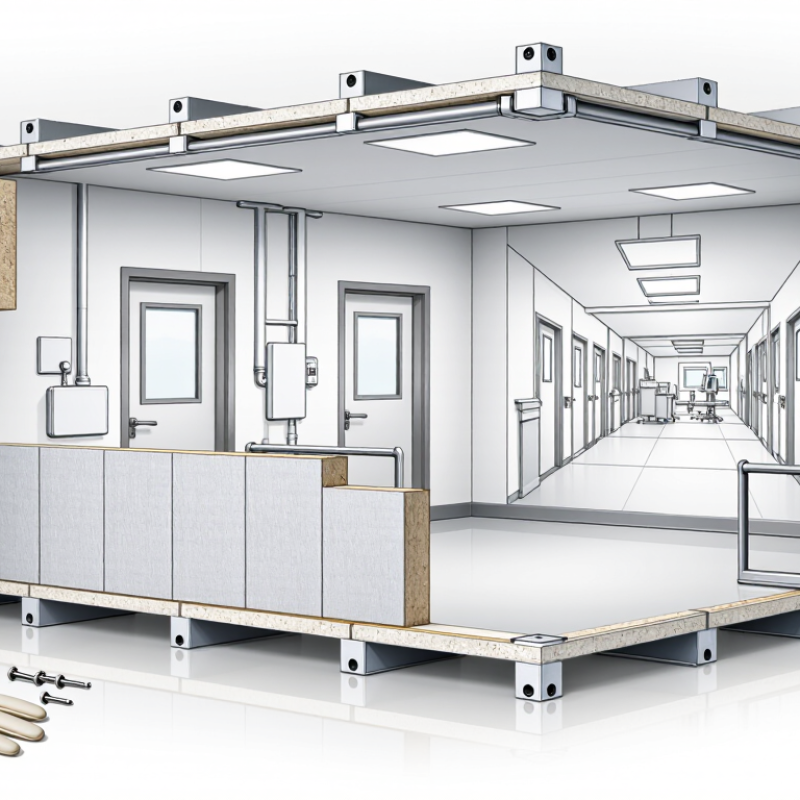
Top Barite Drywall Radiation Shielding Suppliers Worldwide

What Barite Drywall Radiation Shielding Is and How It Works

Barite drywall is a radiation-shielding panel made with gypsum and dense barite, or barium sulfate. It is designed for rooms using diagnostic X-ray equipment. Barite increases the panel’s mass without requiring loose mineral filling. This creates a practical wall system for controlled medical spaces.

The panel does not absorb radiation completely. It works through attenuation, reducing the intensity of X-rays as they pass through its dense structure. Thicker panels usually provide greater protection. However, thickness alone is not enough. Radiation can travel through doors, ceilings, floors, joints, and service openings. Small gaps matter.

In practice, real rooms are less tidy. An experienced radiation physicist or qualified shielding designer should calculate the required protection. They review equipment voltage, workload, room layout, occupancy, and nearby areas. Suppliers should provide tested density data and clear installation guidance. Laboratory data helps, but field conditions can differ. Barite drywall is not a universal answer. Its performance depends on correct thickness, tight seams, stable framing, and careful detailing around penetrations. Good installation matters greatly. Measurements after installation may reveal weak points that drawings miss. This step is sometimes overlooked, and that is worth reconsidering. Reliable projects also follow applicable building and radiation-safety requirements in the local jurisdiction.

Key Performance Standards for Radiation-Shielding Drywall

Top Barite Drywall Radiation Shielding Suppliers Worldwide

Radiation-shielding drywall should be judged by measured performance, not marketing language. Barite content, panel density, thickness, and installation quality all affect attenuation. A reliable supplier provides batch-specific density records and clear technical data. The data should identify test energy, panel thickness, and measurement conditions.

Project requirements often follow guidance from qualified medical physicists, national authorities, and recognized radiation-protection organizations. Suppliers should support calculations based on workload, distance, occupancy, and equipment type. Diagnostic X-ray rooms may require different protection than imaging areas using higher energies. A 12.5-millimeter panel cannot be treated as universally equivalent to another panel.

Seams and penetrations deserve close attention. A small gap around a cable tray can weaken an otherwise dense wall. Good systems include staggered joints, sealed edges, compatible fasteners, and documented installation tolerances. Test reports should be traceable to an independent laboratory and relevant project specifications. Fire resistance, moisture behavior, impact strength, and acoustic performance also matter.

There is no simple “best supplier.” That assumption needs questioning. A technically strong supplier should provide samples, installation guidance, quality-control records, and responsive engineering support. On-site inspection remains valuable, even when paperwork looks complete. The final shielding decision belongs to the project’s qualified radiation professional, not to a product brochure.

Top Barite Drywall Radiation Shielding Suppliers Worldwide - Key Performance Standards for Radiation-Shielding Drywall

Supplier Market / Region Typical Product Format Common Nominal Thicknesses Primary Performance Variables Applicable Product or Installation Standards Radiation-Shielding Design References Required Documentation Before Approval
North America Factory-produced barite-filled gypsum panels or gypsum-board systems installed over metal framing 12.7 mm 15.9 mm 19.1 mm 25.4 mm Panel thickness, dry density, areal mass, compressive strength, joint detailing, and continuity at penetrations ASTM C1396/C1396M for gypsum board; ASTM C840 for gypsum-board application and finishing; ASTM C473 for physical testing of gypsum panels NCRP Report No. 147 for diagnostic X-ray imaging facilities; project-specific calculations by a qualified medical physicist Independent test reports, batch density records, dimensional tolerances, installation instructions, and a shielding layout showing joints and penetrations
Western Europe Barite-based gypsum composite boards and multi-layer partition systems 12.5 mm 15 mm 18 mm 25 mm Declared thickness, mass per unit area, reaction to fire, mechanical resistance, moisture limitations, and system compatibility EN 520 for gypsum plasterboards; EN 13501-1 for reaction-to-fire classification; EN 13964 may apply to suspended ceiling components where relevant National radiation-protection requirements, ICRP Publication 103 principles, and local authority or medical-physics design rules Declaration of performance where applicable, CE-related documentation where applicable, fire classification, product data sheet, and radiation attenuation evidence for the specified X-ray spectrum
Central and Eastern Europe Dense gypsum panels containing barium sulfate aggregate for wall, ceiling, and enclosure applications 12.5 mm 15 mm 20 mm 25 mm Uniformity of barite distribution, density consistency, edge integrity, screw-holding performance, and joint overlap EN 520 or applicable national adoption; EN 13501-1 for fire classification; manufacturer installation method must be validated for the complete system Local implementation of European or national diagnostic-radiology shielding rules; design calculations should identify workload, distance, occupancy, and use factors Factory quality-control results, representative density measurements, panel drawings, corner and joint details, and traceable batch identification
East Asia Barite-filled gypsum board, prefabricated shielding panels, and hybrid gypsum-board assemblies 9.5 mm 12.5 mm 15 mm 18 mm Mass per square metre, panel flatness, dimensional accuracy, fastener spacing, and shielding continuity at service openings Applicable national gypsum-board standards; ASTM C1396/C1396M or EN 520 may be used when specified by the project IEC 61331 series for protective devices and materials used against diagnostic medical X-radiation, where applicable; national medical-physics guidance remains controlling Technical data sheet, composition statement, test method and beam-quality details, installation drawings, and evidence that the complete wall assembly—not only the panel—was evaluated
South Asia Barite-plaster or barite-gypsum board systems used for diagnostic imaging rooms and controlled areas 12.5 mm 15 mm 20 mm 25 mm Barite content, dry density, moisture resistance, substrate preparation, surface hardness, and crack control Applicable national building and gypsum-board standards; ASTM or EN methods may be referenced when accepted in the project specification IAEA Safety Reports and national radiation-protection regulations for diagnostic radiology; final thickness should be calculated for the actual equipment and workload Material composition, density and thickness certificates, sample approval, mixing or installation procedure, curing requirements, and post-installation inspection records
Middle East and Africa Imported dense gypsum panels, barite-based boards, and site-installed barite shielding assemblies 12.5 mm 15 mm 18 mm 25 mm Supply-chain stability, temperature and humidity exposure, panel mass, impact resistance, and treatment of doors, glazing, ducts, and conduits Project-specified ASTM or EN gypsum-board standards; fire-performance requirements should be assessed for the complete wall construction Local authority requirements, NCRP Report No. 147 where adopted by the project, and qualified medical-physicist verification Country-of-origin information, certificate of conformity, storage and handling instructions, system details, delivery inspection, and as-built shielding records
Latin America Barite-filled gypsum panels and layered gypsum-board systems for X-ray, CT, dental, and fluoroscopy rooms 12.5 mm 15 mm 19 mm 25 mm Equivalent lead thickness only when tested for the stated beam quality, panel density, joint construction, and installation tolerances Applicable national gypsum-board standards; ASTM C1396/C1396M, ASTM C840, or EN 520 may be included in the specification by reference National health and radiation-safety regulations, NCRP-based methodologies where accepted, and equipment-specific shielding calculations Attenuation report with kVp and filtration, density data, thickness tolerance, installation details, and acceptance inspection by the responsible radiation-safety professional

Technical note: Barite drywall shielding performance cannot be determined from thickness alone. Required thickness depends on tube voltage, workload, use factor, occupancy factor, source-to-barrier distance, beam direction, material density, and the complete construction detail. Lead-equivalence or attenuation claims should be accepted only when the test beam quality, measurement method, and applicable regulatory requirements are clearly stated.

Major Applications in Medical and Industrial Facilities

Top Barite Drywall Radiation Shielding Suppliers Worldwide

Major Applications in Medical and Industrial Facilities

Barite drywall combines gypsum panels with dense barium sulfate aggregate. It helps limit scattered radiation around controlled rooms. Medical facilities commonly use it in X-ray rooms, CT suites, dental imaging areas, and radiology corridors. Wall thickness depends on equipment output, room layout, occupancy, and adjacent spaces.

Details matter. Panels should meet documented density and thickness requirements. Installers must stagger joints, seal penetrations, and protect corners from impact. A small gap near a conduit can weaken an otherwise careful design. Qualified medical physicists should calculate shielding requirements before purchasing materials. Supplier test reports, safety data sheets, and quality records deserve close review.

Industrial facilities use barite drywall near nondestructive testing rooms, inspection laboratories, and equipment control areas. These spaces may need shielding around imaging devices, viewing windows, doors, and cable routes. Reliable suppliers should provide consistent panel dimensions, clear installation guidance, and traceable production information. International buyers also need to check transport conditions and local building regulations. Performance can vary when moisture affects storage or when installers cut panels carelessly. That risk is easy to underestimate. A complete specification should include the radiation source, workload, occupancy, construction method, and maintenance plan. Supplier comparisons should examine technical support, not only price.

Top Barite Drywall Radiation Shielding Suppliers Worldwide: Major Applications

Indicative application-use index for barite-based drywall and panel shielding in medical and industrial facilities. The index reflects common specification relevance rather than company sales or market share.

Diagnostic X-ray rooms and CT suites are the most frequent applications because they require controlled shielding around imaging equipment. Industrial non-destructive testing areas, nuclear medicine rooms, and research imaging laboratories also use barite-based systems where dense, durable, and space-efficient wall protection is required. Final thickness and layout should be calculated by a qualified radiation-protection physicist according to equipment output, workload, occupancy, and local regulations.

How to Evaluate Global Barite Drywall Suppliers

Top Barite Drywall Radiation Shielding Suppliers Worldwide

How to Evaluate Global Barite Drywall Suppliers

Evaluating a global barite drywall supplier requires more than comparing prices. The U.S. Geological Survey estimated worldwide barite mine production at about 8.5 million metric tons in 2023. This volume supports availability, but it does not prove shielding quality. Ask suppliers for barite purity, panel density, thickness tolerance, and batch-specific test results. Numbers can mislead.

Radiation performance should follow the project’s energy range and workload. NCRP Report No. 147 provides widely used guidance for diagnostic X-ray shielding design. IAEA Safety Reports Series No. 47 also emphasizes controlled calculations, room geometry, and occupancy factors. A reliable supplier should provide attenuation data from an independent laboratory, not only a marketing datasheet. Ask whether results cover the exact panel thickness and radiation spectrum required.

Check manufacturing consistency through factory audits, sample inspections, and traceable certificates. ASTM C1396 can help assess gypsum panel requirements, while ASTM C840 supports installation practice. However, these standards do not replace a project-specific shielding calculation. Confirm moisture resistance, fire performance, edge strength, packaging, and delivery controls. A damaged corner can create an expensive site problem. Ask for recent test dates. Request two production samples before signing a large contract. One weakness remains common: suppliers may publish nominal density without explaining measurement methods. That gap deserves written clarification.

Supplier Comparison by Materials, Certification, and Service Coverage

Selecting a top barite drywall supplier starts with the material, not the sales brochure. Barite-loaded gypsum panels should show declared density, thickness, moisture resistance, and tested attenuation values. Ask whether the barite is evenly distributed through each panel. Uneven loading can create weak points around seams. In hospital imaging rooms, installers often compare 12.5 mm and 15 mm boards, then adjust layers around doors, joints, and service penetrations. The correct choice depends on the calculated shielding design. It is not simply the heaviest board.

Certification needs careful reading. Request batch test reports, safety data, fire classification, dimensional tolerances, and independent radiation attenuation results. Check the test method, energy range, sample thickness, and report date. A certificate without these details has limited value. Suppliers with documented factory quality control are easier to audit. Still, paperwork can look better than site performance. Our practical concern is whether panels arrive undamaged and match the approved specification. That deserves more attention.

Service coverage separates reliable suppliers from distant vendors. Compare regional warehouses, export packaging, lead times, replacement policies, and technical responses across time zones. Strong support may include layout review, cutting guidance, fixing schedules, and installer training. Ask who handles a cracked panel or a missing pallet. Remote advice helps, but local supervision can prevent costly gaps at penetrations. Coverage claims should be verified with references, not assumptions. Even experienced teams occasionally miss a corner detail.