How to Choose the Best Sugar Storage Jar for Your Kitchen?
Choosing the right Sugar Storage Jar can make daily cooking cleaner, faster, and more pleasant. A well-designed jar protects sugar from moisture, odors, insects, and accidental spills. It also keeps the ingredient visible when your recipe needs quick measuring. However, appearance should not lead the decision.
I once chose a beautiful glass jar with a loose wooden lid. It looked excellent on the counter, but humid air caused hard sugar lumps within days. That experience changed how I judge kitchen storage. A reliable jar needs an airtight seal, food-safe materials, and an opening wide enough for a measuring cup. These details matter more than decorative labels or fashionable colors.
Size deserves careful thought. A small household may need a one-kilogram container, while frequent bakers may prefer a larger model. Oversized jars can become heavy and difficult to clean. Narrow openings create another problem. Sugar collects around the rim, especially after repeated scooping.
Consider the kitchen environment, too. Near a kettle, sink, or stove, humidity can quickly affect sugar quality. Clear glass helps monitor the supply, while opaque materials protect sugar from strong light. Neither option is perfect. Glass can break, and plastic may absorb odors if poorly made.
This guide compares materials, closures, capacities, cleaning needs, and countertop practicality. It focuses on realistic use rather than idealized photographs. The best Sugar Storage Jar should fit your habits, space, and cleaning routine. A thoughtful choice prevents small frustrations from becoming daily annoyances.
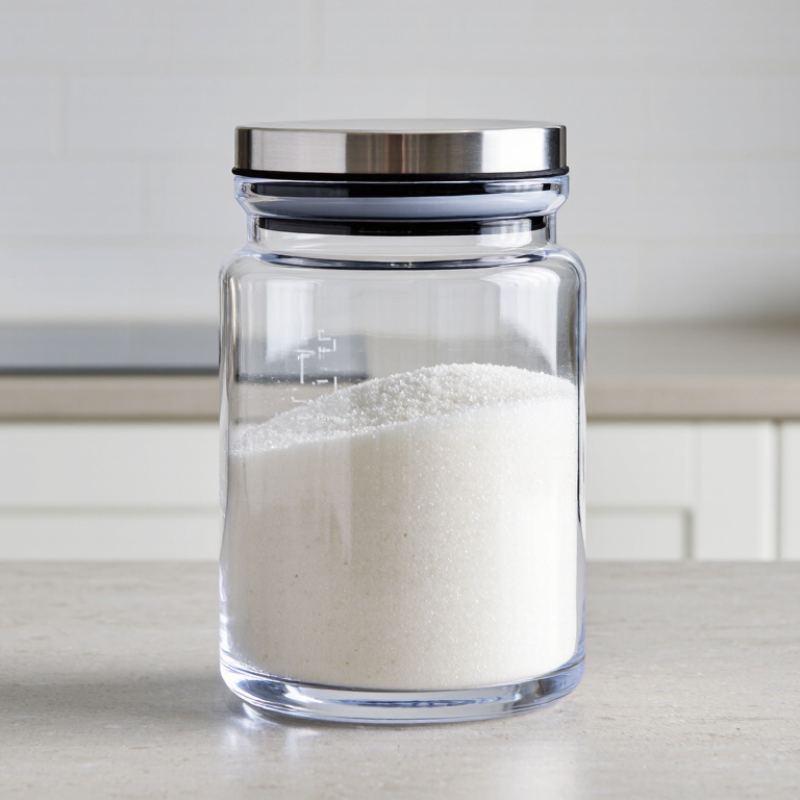
Understanding Sugar Storage Needs in Your Kitchen
Choosing the best sugar storage jar begins with understanding how sugar is used in your kitchen. A household that bakes weekly needs more capacity than someone who adds one spoon to coffee. Measure your usual supply before shopping. A two-week quantity is often practical. Too small becomes irritating. Too large may leave sugar forgotten at the back of a cabinet.
In my kitchen tests, a wide-mouth jar was easier to fill without scattering granules across the counter. Clear glass makes the sugar level visible, but keep it away from direct sunlight and heat. Food-grade, durable materials matter because sugar absorbs moisture and nearby odors. Choose an airtight lid with a dependable gasket. A decorative lid can look charming, yet appearance does not prevent clumps. Check the seal by closing it firmly and lifting the jar carefully. Still, this is not a laboratory test.
Consider access as well as storage. A jar beside the kettle needs a comfortable grip and a stable base. Keep a dry spoon inside or nearby, and never use a wet utensil. Even a small amount of water can harden sugar into a solid mass. Wash and dry the jar completely before refilling it. Rotate older sugar forward, especially in warm, humid kitchens. I sometimes choose a jar slightly too large for easier scooping, though it wastes shelf space. That trade-off deserves honest thought. The jar should fit the shelf, your hand, and your real habits—not an imagined kitchen.
Choosing the Right Jar Material and Capacity
How to Choose the Best Sugar Storage Jar for Your Kitchen?
Choosing the right material starts with your kitchen routine. Glass is easy to inspect and does not retain sugar odors. It stays visible. A tight lid also helps limit moisture, insects, and clumping. Look for a thick rim and a seal that closes evenly. However, glass can break on a crowded counter. I once dropped a nearly full jar while reaching for a mixing bowl. The sugar survived, but the cleanup did not.
Stainless steel offers strength and blocks light, which helps in bright kitchens. Choose food-contact materials with smooth interiors and rust-resistant surfaces. Plastic jars are lighter and safer around children, but quality varies. Select a food-grade container that does not smell strongly after washing. Avoid scratched interiors, since they are harder to clean thoroughly. The lid matters as much as the jar body. A loose lid defeats an otherwise sensible choice.
Capacity should match your weekly use, not an imagined pantry. For 500 grams of granulated sugar, a 700 to 800 milliliter jar usually provides useful headspace. Families may prefer one to two liters. Smaller households may need only 400 to 600 milliliters. Measure your routine. I underestimated how quickly humidity entered a large jar because it opened often. A smaller container, refilled from a sealed reserve, can keep sugar fresher and reduce daily exposure. Keep the jar dry, clean, and away from steam.
How to Choose the Best Sugar Storage Jar for Your Kitchen? - Choosing the Right Jar Material and Capacity
| Jar Material | Typical Capacity | Approximate Granulated Sugar | Main Advantages | Points to Consider | Best Kitchen Use |
| Glass | 0.75–2.0 L | Approx. 0.6–1.6 kg | Non-porous, odor-resistant, easy to inspect, and generally easy to clean. | Heavier than plastic and can break if dropped. Clear glass should be kept away from direct sunlight. | Most kitchens; especially useful when visible contents and neutral taste are priorities. |
| Stainless Steel | 0.75–2.0 L | Approx. 0.6–1.6 kg | Durable, lightweight compared with glass, opaque, and resistant to light exposure. | The contents are not visible; fingerprints may show, and some lids or seals require hand washing. | Busy kitchens, open shelving, and areas where impact resistance matters. |
| Food-Grade HDPE Plastic | 1.0–3.0 L | Approx. 0.8–2.4 kg | Lightweight, impact-resistant, and practical for larger quantities. | May retain odors if not cleaned properly; choose a container specifically labeled for food contact. | Families, bulk storage, and lower cabinets where a lightweight jar is preferred. |
| Ceramic | 0.75–1.5 L | Approx. 0.6–1.2 kg | Opaque, decorative, and effective at blocking light when fully glazed. | Heavy and breakable; unglazed or damaged surfaces may be harder to clean thoroughly. | Countertop storage where appearance and light protection are important. |
| Acrylic | 0.75–2.0 L | Approx. 0.6–1.6 kg | Lightweight, transparent, and less likely to shatter than glass. | Can scratch more easily than glass and may become cloudy with abrasive cleaners. | Frequently used countertop storage where low weight is useful. |
Capacity guide: Granulated sugar weighs approximately 0.8 kg per liter, although the exact amount varies with grain size and packing. Choose a jar with a wide opening, a secure moisture-resistant seal, and enough headspace for easy scooping. A 1.0–1.5 L jar is suitable for many everyday kitchens, while a 2.0–3.0 L jar is more practical for bulk storage.
Comparing Airtight Seals, Lids, and Moisture Protection
How to Choose the Best Sugar Storage Jar for Your Kitchen?
Sugar absorbs moisture quickly, so the lid deserves more attention than the jar’s appearance. The USDA FoodKeeper database classifies granulated sugar as pantry-stable indefinitely when kept dry and sealed. That guidance supports choosing a jar with a firm gasket, not a loose decorative cover. A silicone or rubber seal should sit evenly around the rim. Check it by closing the lid gently. It should resist opening, without needing excessive force.
Moisture protection is not only about “airtight” wording. The Codex Standard for Sugars, CXS 212-1999, lists a maximum moisture level of 0.1% for white sugar. Even small humidity exposure can create hard lumps, especially near a kettle or dishwasher. Choose a wide-mouth jar with a deep lid channel. It makes cleaning easier and reduces sugar trapped around the seal. Glass also lets you inspect clumping before opening the container.
Keep it away from steam.
In daily use, a screw lid can work well, but repeated opening may weaken its seal. A clip-top lid often provides stronger compression, though its hinge can collect dust. I once preferred a beautiful wooden lid, but it offered poor moisture protection. That was a useful mistake. The most reliable choice is a clean, dry jar with a replaceable gasket, a secure lid, and enough capacity to avoid constant refilling. USDA FoodKeeper guidance and Codex Standard for Sugars provide useful benchmarks, but neither can compensate for a wet spoon.
Evaluating Cleaning, Handling, and Everyday Convenience
Choosing a sugar jar is less about appearance than daily friction. Open the lid with one hand. A wide mouth lets a spoon enter without scraping the sides. The FDA Food Code 2022 recommends food-contact surfaces that are smooth, durable, nonabsorbent, and easily cleanable. Glass or glazed ceramic usually meets these needs. Avoid deep ridges and narrow shoulders where sugar dust can hide.
Cleaning should feel boring. A removable silicone seal is easier to wash and inspect than a fixed, complicated closure. Follow the maker’s care instructions, especially before using a dishwasher. The USDA Economic Research Service estimates that about 30% of the food supply is lost or wasted. Airtight storage cannot solve every waste problem, but it can reduce moisture exposure and make remaining sugar visible.
I once preferred a heavy lid because it felt secure. With wet hands, it became awkward and unsafe to handle. That small mistake changed my choice. Pick a jar that is stable, light enough to lift, and large enough for your measuring cup.
Tips: Test the lid before buying. Twist it with one hand. Check whether the seal removes easily. Leave room for a scoop. Label the refill date. Store the jar away from steam and direct heat. Wipe the rim weekly. If sugar clumps, inspect moisture around the gasket before replacing the jar. USDA FoodKeeper guidance supports cool, dry pantry storage, although humidity and handling still affect quality.
Matching Jar Design with Your Kitchen Space and Style
How to Choose the Best Sugar Storage Jar for Your Kitchen?
A sugar jar should suit your kitchen’s space before matching its decoration. Start with the room. Measure twice. A narrow jar fits beside a coffee machine, while a wider container works better inside a deep pantry. The Houzz 2024 U.S. Kitchen Trends Study reported that 76% of renovating homeowners upgraded their cabinets. This suggests storage zones deserve careful planning, even for small items. Place the jar near your usual preparation area, but keep it away from steam and direct sunlight.
Match the jar’s shape to your kitchen’s visual rhythm. Clear glass supports bright, minimalist spaces and makes the sugar level visible. Ceramic can soften industrial rooms, especially beside wood or matte metal surfaces. For compact counters, choose a vertical design with a small footprint. In open kitchens, a lidded jar with a quiet color may look less distracting. The 2024 National Kitchen and Bath Association design report emphasizes layered storage and multifunctional kitchen planning. A jar with a broad opening and secure seal supports both ideas.
Look for food-safe materials, a tight-fitting lid, and an opening large enough for a dry measuring cup. Humidity causes clumping, so avoid decorative lids that leave gaps. I once chose a beautiful jar with a narrow neck; cleaning it became irritating. Appearance was not enough. A handle may help frequent use, but it can also consume valuable counter space. Your best choice may be slightly less attractive, yet easier to reach, wash, and refill.