Why Choose an Injection Molding Machine With Robot Automation?
In today’s competitive manufacturing landscape, automation is no longer optional. The use of an Injection Molding Machine With Robot technology could be pivotal. According to a recent report by MarketsandMarkets, the global injection molding machine market is projected to reach $12.57 billion by 2026, growing at a CAGR of 3.2%. This growth illustrates the increasing reliance on advanced automation in production processes.
Johan Schmidt, an expert in industrial automation, stated, “The integration of robots with injection molding machines enhances productivity and consistency." Automation helps reduce labor costs and human error. Yet, transitioning to this technology can present challenges. High initial investment and the need for skilled operators can deter some manufacturers.
Despite these hurdles, the potential benefits are significant. Automated systems can optimize cycle times and improve output quality. Companies that embrace these innovations often find themselves ahead of their competitors. However, companies must acknowledge that adapting to such technology requires time and continuous learning.
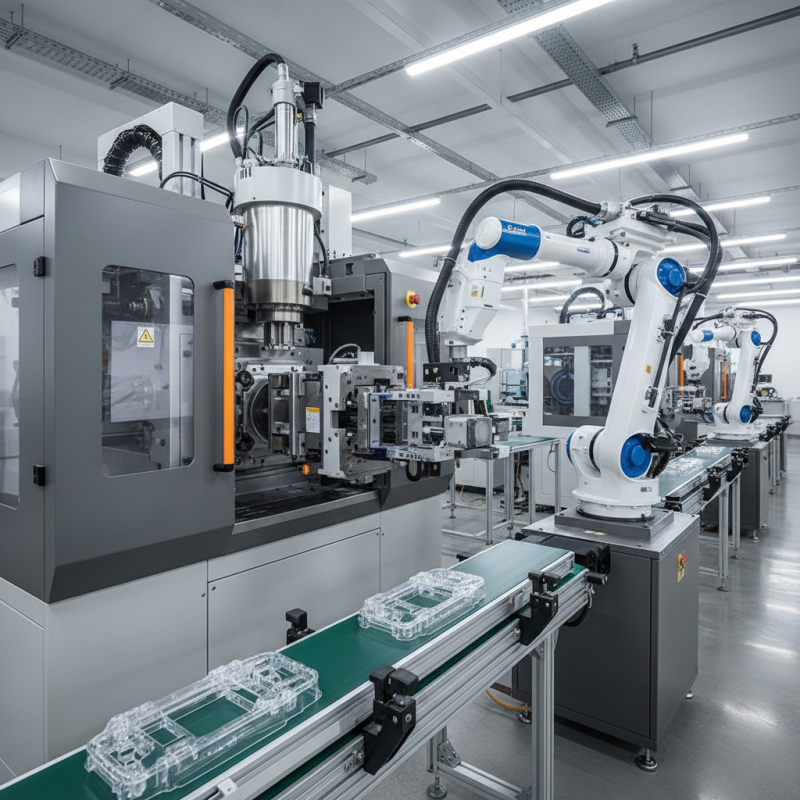
Benefits of Integrating Robot Automation with Injection Molding Machines
Integrating robot automation with injection molding machines is transforming the manufacturing landscape. Robots can perform tasks such as loading and unloading quickly and precisely. This increases production speeds and reduces cycle times. The repetition of these tasks minimizes human error, leading to higher quality products. Productivity can skyrocket with this combination, but it's not without challenges.
One potential drawback is the initial investment in robotic systems. This cost can be discouraging for some companies. Additionally, integrating these systems requires skilled operators. Training employees to work alongside robots may take time. Some manufacturers may worry about potential job loss, leading to resistance against automation. Reflecting on these aspects is crucial when considering such a transition.
Another consideration is the maintenance of robotic systems. They can require specialized knowledge for repairs. Downtime due to technical issues can impact production. Balancing automation benefits with these challenges is vital. The future of manufacturing may well depend on these decisions. Finding the right approach involves careful thought and planning.
Key Features of Injection Molding Machines with Robot Automation
Injection molding machines equipped with robot automation offer numerous advantages. These advanced systems streamline production processes, enhance precision, and reduce labor costs. According to recent industry reports, companies that adopt automation can improve their productivity by up to 30%. This increased efficiency is crucial in a competitive market.
Key features of injection molding machines with robot automation include high-speed operation and improved consistency. Robots can handle repetitive tasks quicker than human operators. They also minimize the risk of errors, leading to better product quality. The integration of vision systems in robotic arms further ensures that defects are detected early in the process.
**Tip:** Consider integrating advanced software for real-time monitoring. This can help identify any production bottlenecks and optimize workflow.
Despite the advantages, transitioning to automation can be challenging. Initial setup costs may deter some manufacturers. Additionally, employees may need retraining to adapt to new technologies. Ignoring these challenges can lead to suboptimal implementation.
**Tip:** Invest in training programs early. A well-prepared workforce can significantly enhance the benefits of automation.
Impact of Robot Automation on Production Efficiency and Cost Reduction
Injecting automation into injection molding processes offers significant benefits. Robot automation directly impacts production efficiency. It streamlines operations, reducing cycle times. This gradual enhancement leads to higher output. Manufacturers notice improvements in consistency. Products are made with fewer defects.
Automation reduces labor costs over time. Fewer operators are needed on the floor. The machines can run longer hours, with minimal breaks. As a result, your facility can produce more with less. However, initial setup costs can be high. It’s essential to analyze your return on investment carefully.
Tip: Regularly assess the integration of automation in your production line. Evaluate whether the robots are increasing efficiency as expected. Monitor the performance metrics consistently. Sometimes, minor adjustments can lead to substantial gains.
Incorporating robots into the process can enhance quality assurance. Yet, some companies struggle with workforce adaptation. Employees may feel threatened by automation. Addressing these concerns is crucial. Engage your team in the transition. This creates a more collaborative environment, ensuring everyone benefits from the changes.
Impact of Robot Automation on Production Efficiency and Cost Reduction
Comparison of Manual vs. Automated Injection Molding Processes
The comparison of manual and automated injection molding processes reveals significant differences in efficiency and productivity. Manual systems require operators to handle each stage, from setup to finishing. This conventional approach can lead to human errors and inconsistencies in product quality. According to a recent report, manual processes can result in a defect rate of up to 10%, largely due to human oversight.
In contrast, automated injection molding reduces the chances of error. Robots can work tirelessly, ensuring precision and consistency. A study from the Injection Molding Association shows that automated systems can boost production rates by as much as 30%. This increased efficiency not only reduces costs but also enhances product quality. However, automated systems come with a higher initial investment, which can deter some businesses.
Tip: When considering automation, evaluate your production volume and quality requirements. Sometimes, a hybrid approach, combining manual overseeing with automation, can mitigate costs while improving precision.
Despite the advantages of automation, it's crucial to train operators to understand the machines. An unskilled worker may struggle with troubleshooting automated systems. This gap can lead to downtime, affecting overall productivity. Regular training and maintenance are essential for the success of any automated setup.
Future Trends in Injection Molding and Robot Automation Technology
The landscape of injection molding is rapidly evolving. Automation is now a significant part of the process. Robots are improving efficiency in production lines. They handle tasks like part placement and quality checks. This shift reduces human error. It also speeds up production times.
The future of robot automation in injection molding looks promising. Companies are focusing on integrating smart technology. Enhanced data analytics and AI will help monitor processes. However, transitioning to these systems can be challenging. Some workers may resist automation due to job fears. Training and adaptation are key for a smooth transition.
Moreover, sustainability is becoming a priority. Machines are being designed for energy efficiency. This trend aligns with global efforts to reduce carbon footprints. Yet, the initial costs for such technology can be daunting for some manufacturers. Balancing innovation with economic realities remains a dilemma.