What is a Laser Welder and How Does it Work?
A Laser welder is a powerful tool used in various industries for precise joining of materials. Unlike traditional welding methods, it employs focused laser beams to melt and fuse metals. This technology has revolutionized manufacturing, enhancing both speed and quality of welds. The laser welder operates by directing a concentrated beam onto the material, causing localized heating. The result is a clean, strong bond that reduces the need for extensive finishing.
However, while the benefits are significant, using a laser welder requires expertise. Operators must understand the material properties and laser settings to achieve optimal results. Inexperienced use can lead to undesirable outcomes, such as weak joints or material distortion. Given its complex nature, training is essential to harness the full potential of a laser welder.
In summary, the laser welder stands as a testament to modern engineering. It offers speed and efficiency, yet presents challenges that demand careful consideration. Understanding its operation and implications is key for successful application.
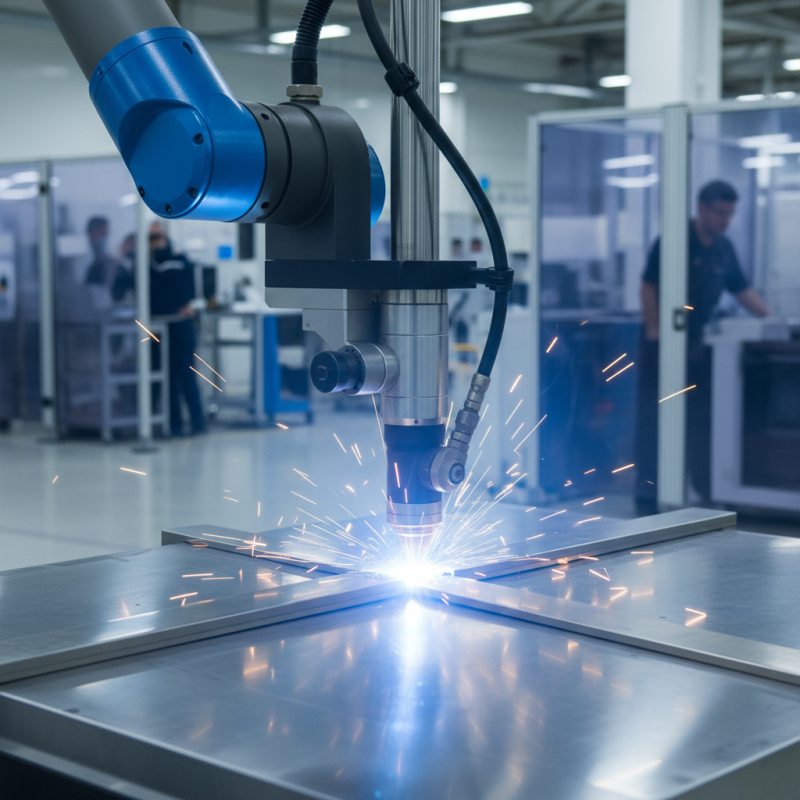
What is a Laser Welder?
A laser welder is a sophisticated tool used in various industries. It employs a focused beam of light to melt and join materials together. This process is often used for metals and thermoplastics. The precision of a laser welder allows for intricate designs and tight tolerances. It is highly effective for thin materials and complex shapes.
The operation involves directing a high-energy laser beam onto the surfaces to be welded. The intense heat melts the materials at the joint, creating a strong bond as they cool. This method can be automated, which increases production efficiency. It is often favored for its minimal thermal distortion. However, proper setup and calibration are crucial to achieve the desired results and avoid defects.
Despite its advantages, laser welding isn't without challenges. It requires skilled operators who can diagnose issues and adjust settings. Equipment costs can be significant, and maintenance is essential for optimal performance. Understanding the nuances of laser technology takes time and experience. Each project may reveal limitations or unexpected results, prompting reflection and learning.
What is a Laser Welder and How Does it Work?
| Feature | Description |
| Working Principle | A laser welder uses a focused beam of laser light to melt and fuse materials together. |
| Common Materials | Metals (including steel and aluminum), plastics, and ceramics. |
| Applications | Used in automotive, aerospace, electronics, and medical device manufacturing. |
| Advantages | High precision, minimal thermal distortion, and ability to weld complex geometries. |
| Disadvantages | Higher equipment costs and requires skilled operators. |
| Safety Considerations | Proper safety gear and training are essential due to the intensity of the laser light. |
Principles of Laser Welding Technology
Laser welding is a sophisticated technique that utilizes focused laser beams to join materials, typically metals. The process relies on the principle of concentrating high energy into a small area. This energy is sufficient to melt the edges of the materials being joined, creating a precise weld. The intense heat of the laser ensures minimal heat-affected zones, which helps maintain the integrity of the surrounding material.
One critical aspect of laser welding technology is its ability to produce clean, strong welds with excellent control over the process parameters. Adjusting the laser power and speed allows for different thicknesses and types of materials to be welded effectively. However, achieving the perfect settings can sometimes be challenging. Operators must monitor the parameters closely and make adjustments as needed. A minor change in speed or intensity can significantly impact the weld quality.
Understanding the principles behind laser welding is crucial for experts in the field. Knowledge of optics, material properties, and thermal dynamics is essential. Professionals in this area continue to experiment with new techniques and equipment. Advanced training often leads to innovative solutions and improved efficiency. However, ongoing challenges remain, including equipment costs and the need for skilled operators. Continued research in this field promises to enhance the reliability and application of laser welding technology.
Components of a Laser Welding System
Laser welding systems consist of several essential components that contribute to their efficiency and precision. A typical system includes a laser source, focusing optics, and a control unit. The laser source generates a concentrated beam of light, which is crucial for the welding process. According to a report by the Institute of Laser Technology, nearly 30% of automotive manufacturers are incorporating laser welding technology into their production lines. This shows the significance of advanced components in achieving high-speed welding.
Focusing optics play a critical role in directing the laser beam onto the workpiece. They help create a narrow, powerful beam that ensures deep penetration. Observations from the International Journal of Advanced Manufacturing Technology highlight that precise optics can improve joint strength by at least 15%. However, the alignment of these optics is often a challenge. Misalignment can lead to weak welds and increased rework costs.
The control unit manages the entire operation, including laser power settings and movement speed. While automation has improved efficiency, operators still face setbacks due to software glitches or calibration errors. Reports indicate that up to 20% of laser welding failures are linked to these control systems. Overall, a laser welding system is a robust technology, but it is crucial for manufacturers to continually assess and optimize each component to avoid production downtime.
Applications of Laser Welding in Various Industries
Laser welding technology is making significant strides across various industries. This method provides precision and efficiency, crucial for modern manufacturing. According to a recent report by MarketsandMarkets, the global laser welding market was valued at approximately $3.5 billion in 2022 and is expected to grow at a CAGR of 5.2% from 2023 to 2028. Industries such as automotive, aerospace, and electronics are major adopters of this technology.
In the automotive industry, laser welding is used for assembling components like car frames and exhaust systems. This technique allows for lighter and stronger welds. For instance, a study by the American Society of Mechanical Engineers highlights that laser welding can reduce assembly time by up to 30%, improving production efficiency. However, the integration of this technology also poses challenges, such as the need for skilled operators and the high initial investment costs.
The aerospace sector benefits significantly from laser welding's precision. It ensures strong bonds in critical components, enhancing safety and durability. A report from the International Journal of Advanced Manufacturing Technology noted that laser welding improved the quality of joints in aerospace applications by 50%. Nonetheless, the complexity of materials used in aerospace can complicate the welding process, leading to inconsistencies that must be addressed. Continuous training and adaptation of techniques are essential for maintaining quality standards.
Advantages and Limitations of Laser Welding Compared to Traditional Methods
Laser welding is becoming increasingly popular in various manufacturing sectors. This method’s precision can lead to significant advantages over traditional welding techniques. For instance, studies indicate that laser welding can enhance joint strength by up to 30%. This is largely due to the concentrated heat application, which minimizes the heat-affected zone.
However, laser welding is not without its limitations. One significant drawback is the high initial investment cost. The equipment and setup can be expensive, potentially deterring smaller operations. Additionally, laser welding often requires skilled operators, which can add to labor costs. Some reports suggest that over 50% of companies experience a learning curve when adopting this technology.
Despite these challenges, the efficiency of laser welding is hard to ignore. It generally results in faster welding speeds, cutting time by nearly 50% compared to traditional methods. This rapid processing is advantageous in high-volume production environments. Yet, the technology may struggle with thicker materials, sometimes compromising joint integrity. Therefore, businesses must assess their specific needs before deciding on laser welding as the go-to method.