What is Nichrome Flat Wire and Its Applications?
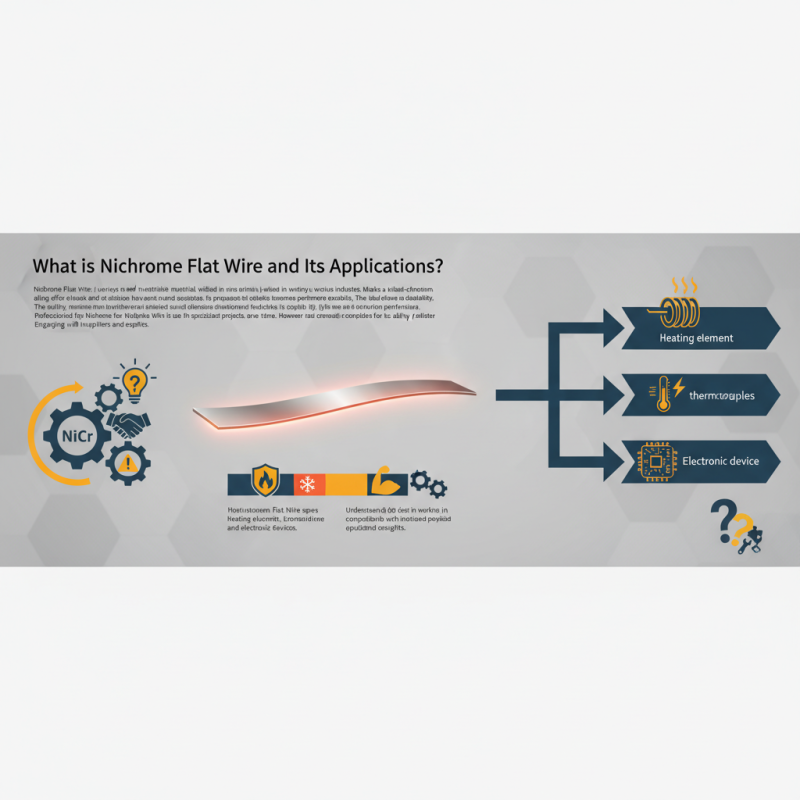
Nichrome Flat Wire is a unique and versatile material widely used in various industries. Made from a nickel-chromium alloy, this wire offers excellent resistance to heat and oxidation. Its properties make it an ideal choice for applications where durability is essential. The wire maintains performance even in extreme conditions, ensuring reliability.
The use of Nichrome Flat Wire spans numerous fields, including heating elements, thermocouples, and electronic devices. Industries value its capability to withstand high temperatures and provide consistent performance. Professionals recommend Nichrome for its ability to deliver superior results over time.
Understanding the various applications of Nichrome Flat Wire can enhance its use in specialized projects. However, challenges do exist in working with this material. Users must consider factors such as compatibility with other components and specific operational conditions. Engaging with knowledgeable suppliers and experts can provide valuable insights.
What is Nichrome Flat Wire?
Nichrome flat wire is a unique alloy made primarily of nickel and chromium. This combination offers excellent resistance to heat and oxidation, making it ideal for various applications. The wire is typically flat in shape, which enhances its ability to conduct electricity and heat efficiently. Due to its exceptional thermal performance, nichrome flat wire is widely used in heating elements and resistance wires.
In industrial settings, nichrome flat wire plays a critical role. It's used in furnaces, kilns, and toasters, providing reliable heating solutions. DIY enthusiasts also appreciate its versatility for crafting heating elements in various projects. This wire can withstand high temperatures without losing its structural integrity, which is crucial in both commercial and residential settings.
However, using nichrome flat wire is not without challenges. It requires careful handling due to its specific electrical properties. Proper insulation is essential to prevent overheating and potential safety hazards. Many users may find it challenging to work with, especially if they are not familiar with its characteristics. Understanding its properties is vital for anyone looking to leverage this alloy effectively.
Composition and Properties of Nichrome Flat Wire
Nichrome flat wire is an essential alloy widely used in various applications. It primarily consists of nickel and chromium, which contributes to its high resistance to oxidation and heating. This unique composition makes nichrome flat wire an ideal candidate for heating elements in electric heaters and toasters. Industry reports indicate that the typical nickel content ranges from 80% to 60%, with chromium making up the rest. This balance ensures optimal performance under high temperatures.
The physical properties of nichrome flat wire are notable. It exhibits excellent mechanical strength and durability. At elevated temperatures, it maintains its shape and resists deformation. For instance, nichrome can operate effectively at temperatures exceeding 1,200 degrees Fahrenheit. However, its performance can decline under extreme environmental conditions. Adaptation to varying thermal stresses remains a challenge for engineers to address.
Beyond heating applications, nichrome flat wire serves in applications like resistance welding and thermocouples. Its ability to provide consistent electrical resistance is crucial for these uses. Yet, the cost of raw materials and production can hinder broader adoption in some markets. Companies must navigate these economic factors to leverage nichrome's advantages fully. Overall, nichrome flat wire's properties make it indispensable, but continuous improvement in its applications is vital for future innovations.
Common Applications of Nichrome Flat Wire in Heating Elements
Nichrome flat wire is a popular choice for heating elements due to its unique composition. It consists mainly of nickel and chromium, which makes it resistant to oxidation and high temperatures. This resistance is crucial for applications requiring consistent and efficient heat generation. The wire can be easily formed into various shapes, allowing for versatility in design.
Commonly, nichrome flat wire is used in industrial heaters, toasters, and hair dryers. In these devices, the wire efficiently converts electrical energy into heat. The flat design allows for increased surface area, enhancing the heating process further. Users often find that the uniform heating it provides is key to achieving reliable results.
However, not all applications maximize its potential. Some users struggle with the wire's durability under extreme conditions. Inconsistent temperatures can lead to premature failure. It's essential for manufacturers to understand the specific requirements of their devices. A mix of good design, proper material use, and regular maintenance can help mitigate these issues.
Common Applications of Nichrome Flat Wire in Heating Elements
Advantages of Using Nichrome Flat Wire in Various Industries
Nichrome flat wire is an essential material in various industries. Its unique composition consists primarily of nickel and chromium, giving it excellent resistance to oxidation and heat. This makes it particularly effective in high-temperature applications. The wire is flat, which allows for efficient packing and reduces the risk of tangling during use.
One significant advantage of nichrome flat wire is its reliability in heating elements. Many manufacturers prefer it for toasters, ovens, and industrial heaters. Unlike other metals, nichrome maintains durability even under extreme heat. In addition, it has a low thermal expansion coefficient, which contributes to its stability in heating applications. This property reduces the risk of warping or bending, which is critical in settings where precision is required.
**Tip:** When working with nichrome flat wire, ensure that your tools are properly calibrated. This helps in achieving better results while minimizing waste.
Another remarkable benefit lies in its corrosion resistance. Nichrome flat wire can withstand harsh environments. Laboratories and chemical industries often utilize it for this reason. It can endure exposure to various chemicals without degrading. However, users must ensure they are aware of its limitations as well.
**Tip:** Always conduct a small test when using nichrome in new applications. It will help you understand its behavior and performance better.
Comparative Analysis of Nichrome Flat Wire with Other Wires
Nichrome flat wire is widely recognized for its unique properties, offering advantages over other wire types. It contains nickel and chromium, providing excellent oxidation resistance and high-temperature stability. This makes it suitable for applications like heating elements and industrial furnaces. According to a recent industry report, Nichrome wire performs optimally at temperatures above 1000°C, unlike copper or aluminum wire, which can degrade.
When comparing Nichrome flat wire to alternatives, several key factors come into play. Copper wire has superior conductivity, but it cannot endure high temperatures like Nichrome. Aluminum is lightweight and corrosion-resistant, yet it lacks the thermal stability needed for high-temperature applications. A study indicates that Nichrome's longevity and reliability can be ten times greater than standard copper in specific environments.
Tip: Always consider the operational environment when selecting wire types. Nichrome may not be the best choice for every application. Additionally, while its cost is higher than copper, the long-term savings from durability can outweigh initial expenses.
Tip: In experiments involving high temperatures, monitor performance closely. Nichrome flat wire can exhibit some brittle behavior if subjected to stress beyond its limits. Understanding these factors will lead to better material choices for your specific needs.
What is Nichrome Flat Wire and Its Applications? - Comparative Analysis of Nichrome Flat Wire with Other Wires
| Property | Nichrome Flat Wire | Copper Wire | Aluminum Wire | Stainless Steel Wire |
| Resistivity (Ω·m) | 1.10 × 10⁻⁶ | 1.68 × 10⁻⁸ | 2.65 × 10⁻⁸ | 7.2 × 10⁻⁷ |
| Max Operating Temp (°C) | 1250 | 85 | 150 | 800 |
| Thermal Conductivity (W/m·K) | 16.5 | 401 | 237 | 16 |
| Tensile Strength (MPa) | 480 | 210 | 90 | 500 |
| Applications | Heating elements, resistors | Electrical wiring, connectors | Lightweight electrical conductors | Corrosion-resistant applications |