
10 Tips for Choosing Worki Sous Vide Equipment
Choosing Worki Sous Vide equipment is not simply a matter of buying the most powerful machine. The right choice depends on cooking volume, water capacity, temperature stability, cleaning habits, and kitchen space. A compact immersion circulator may suit a home cook preparing two steaks. A busy restaurant needs stronger circulation, durable construction, and dependable long-term performance.
Dr. Bruno Goussault, a respected sous vide researcher and educator, has emphasized the importance of precision in this cooking method: “Precision must serve safety, not replace it.” That idea should guide every equipment decision. A clear digital display is useful, but it cannot compensate for poor sanitation or careless handling. A large container looks professional. It may also waste energy when only a small portion is cooking.
This guide presents ten practical tips for choosing Worki Sous Vide equipment. It examines heating power, temperature accuracy, circulation strength, container compatibility, noise, controls, cleaning, safety features, warranty support, and total cost. Small details matter. A loose clamp can become frustrating. A difficult-to-clean surface can become a hygiene concern. Some buyers focus too heavily on specifications, then ignore everyday comfort. That is a mistake worth reconsidering. The best equipment should feel predictable beside a stainless-steel counter, remain stable during long cooking sessions, and fit the user’s real workflow. No device is perfect, including premium models. Careful comparison, honest expectations, and safe cooking practices usually produce better results than impressive marketing claims.
Understanding Sous Vide Equipment and Its Main Functions
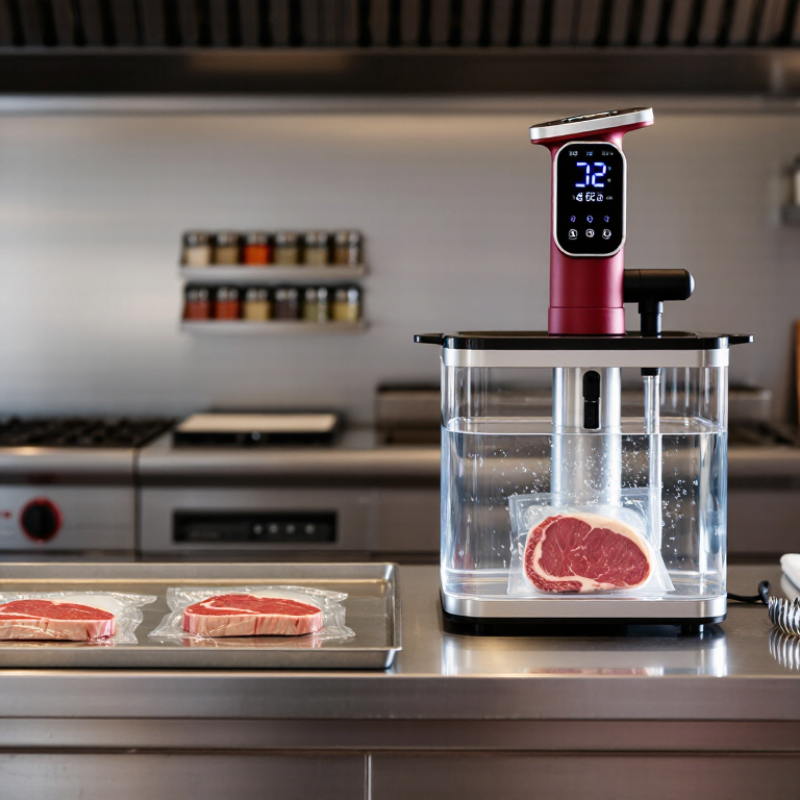
Sous vide equipment controls cooking temperature through a heated water bath and steady circulation. Its core function is precision, not speed. A reliable circulator should maintain stable heat, display real-time temperature, and alert users when water levels fall. A tight lid also reduces evaporation during long cooking sessions. Small details matter.
Vacuum equipment removes air and keeps food submerged. However, vacuum sealing does not replace safe handling. The FDA Food Code 2022 requires cooling cooked food from 135°F to 70°F within two hours, then to 41°F within four hours. This standard is useful when planning cook-chill workflows. An ice bath, shallow containers, and a calibrated thermometer support that process. The USDA FSIS Appendix A also emphasizes validated time-and-temperature controls for reducing foodborne hazards.
I have found that data logging is often overlooked. It can record bath temperature, cooking time, and cooling performance for later review. Choose equipment with readable controls, washable surfaces, strong circulation, and clear alarms. Electrical protection matters near water. So does routine calibration. A display may look accurate while drifting several degrees. That mistake can change texture and safety margins. Sous vide is not entirely automatic. Operators still need clean preparation areas, labeled portions, and documented checks. Sometimes, simpler equipment performs better because staff actually use it correctly.
Assessing Cooking Needs, Capacity, and Available Space
Choosing sous vide equipment starts with your actual cooking habits, not the most impressive specifications. In my kitchen trials, a compact cooker handled weekday meals well, but struggled with large roasts. Consider how often you prepare food, the ingredients you use, and your preferred portion sizes. A single household may need a smaller vessel, while family cooking requires more water volume and stable temperature control.
Capacity affects both results and convenience. Crowding can block water circulation and create uneven cooking. Leave space between sealed bags whenever possible. Measure your largest pot or container before purchasing equipment. Then check the cooker’s minimum and maximum water levels. Small details matter. A ten-liter container may appear generous, yet tall bags can reduce usable space.
Available space deserves equal attention. Measure cabinet height, countertop depth, and nearby electrical access. Steam, splashes, and heavy containers can make a cramped area frustrating. Use a heat-resistant surface and keep the control panel visible. I once chose a container that fit the cooker but not the storage shelf. That mistake still seems avoidable. Reviews from culinary schools, safety organizations, and experienced users can provide useful evidence, but personal testing remains important. Cooking needs change, too, so leave some capacity for future meals without buying equipment that dominates your kitchen.
10 Tips for Choosing Worki Sous Vide Equipment - Assessing Cooking Needs, Capacity, and Available Space
| No. | Selection Tip | What to Assess | Practical Guideline | Recommended Specification | Priority |
|---|---|---|---|---|---|
| 1 | Define the cooking purpose | Identify whether the equipment is intended for home meals, meal preparation, catering, or commercial service. | List the foods, cooking frequency, and expected production volume before comparing models. | Choose a compact unit for occasional use or a heavy-duty unit for frequent, high-volume cooking. | High |
| 2 | Estimate batch size | Consider the number of portions cooked at one time and the size of the largest food packages. | Allow enough room for water circulation around every pouch; avoid tightly packing the container. | For small batches, a 6–12 L vessel is generally practical. Larger batches may require 15–30 L or more. | High |
| 3 | Measure available counter space | Record the usable length, width, and height of the intended storage and operating area. | Leave clearance around ventilation openings and enough room to fill, drain, and clean the vessel safely. | Keep at least 5–10 cm of open space around air vents where required by the equipment design. | High |
| 4 | Check water-temperature control | Review temperature range, adjustment increments, stability, and display readability. | Stable temperature control is important for delicate foods such as fish, eggs, and tender cuts of meat. | Look for a working range that reaches at least 85°C and allows adjustments of approximately 0.1°C. | High |
| 5 | Evaluate heating and circulation performance | Compare heating power, circulation strength, and recovery time after adding cooler food. | Higher capacity and larger food loads generally need stronger circulation and sufficient heating power. | A circulation rate near 8–15 L/min is suitable for many domestic and light-duty applications, depending on vessel design. | High |
| 6 | Match the equipment to the power supply | Confirm voltage, frequency, plug type, and maximum electrical load available at the operating location. | Do not use an appliance that exceeds the circuit rating or requires an unsuitable adapter. | Many household units operate at approximately 1,000–1,500 W; verify the local electrical requirements before purchase. | High |
| 7 | Consider insulation and water evaporation | Assess lid fit, insulation quality, evaporation control, and the length of unattended cooking cycles. | A well-fitted lid reduces heat loss and helps maintain the water level during long cooks. | For cooking periods longer than 8 hours, choose a covered or insulated container and monitor the water level. | Medium |
| 8 | Review cleaning and maintenance needs | Check whether the heating element, pump, container, and seals can be accessed and cleaned easily. | Removable or accessible components simplify descaling and reduce the risk of residue buildup. | Prefer food-safe stainless steel or similarly durable materials, with smooth surfaces and replaceable seals where applicable. | High |
| 9 | Assess safety features | Look for low-water protection, over-temperature protection, secure clamping, and automatic shutoff functions. | Safety controls are particularly important when the equipment operates for several hours or in busy kitchens. | Choose equipment with low-water detection and an automatic stop or alert when the water level becomes unsafe. | High |
| 10 | Balance portability, storage, and budget | Consider equipment weight, storage location, noise level, warranty coverage, and expected service life. | A compact appliance may be preferable when it must be moved frequently, while larger units provide greater batch capacity. | Compare total ownership cost, including energy use, accessories, maintenance, and replacement parts—not only the initial price. | Medium |
Comparing Circulators, Water Ovens, and Essential Accessories
Choosing sous vide equipment starts with understanding how each system behaves in a real kitchen.
An immersion circulator clips to a pot or container and heats water while moving it continuously. It is flexible, compact, and useful for different batch sizes.
A water oven has an integrated tank, lid, and heating system. It usually offers better insulation and steadier operation during long cooks. However, it takes more storage space and limits the usable water volume.
Check temperature accuracy before trusting any device.
I compare the display with a calibrated kitchen thermometer in still water. A small difference can affect delicate fish, custards, and tender meats. Circulators need enough water around the intake and should not touch sealed bags. Water ovens need clear space around the lid and a stable, level surface.
That matters. Measure twice.
Accessories often determine whether cooking feels controlled or frustrating.
Use heat-resistant containers, compatible racks, and strong clips to prevent bags from floating. Insulated balls or a fitted lid can reduce evaporation during overnight cooking. Keep separate tongs for raw and cooked food, and clean every surface that contacts water or packaging.
I once underestimated bag displacement and nearly overflowed a container. The mistake was avoidable. A timer, spare thermometer, and waterproof labels also improve repeatability, even when the setup is not perfect.
Checking Temperature Accuracy, Control Features, and Durability
When choosing worki sous vide equipment, temperature accuracy should guide every decision. Tip 1: Check the stated accuracy range, not only the displayed temperature. Tip 2: Compare the reading with a calibrated thermometer in a water bath. Tip 3: Look for stable heating, because sudden swings can affect texture and food safety. Tip 4: Test the machine at both low and high cooking temperatures. Small errors become obvious there. A bright screen is useful, but accuracy matters more.
Control features shape the daily cooking experience. Tip 5: Choose controls that allow precise one-degree adjustments. Tip 6: Check whether the timer is easy to set with wet hands. Tip 7: Consider an alarm for temperature changes or water loss. Tip 8: Read the operating instructions before buying. I once trusted a simple interface too quickly. That shortcut was a mistake. Complicated menus can slow preparation, especially during busy service.
Durability requires practical inspection. Tip 9: Examine the clamp, seals, housing, and power cord for solid construction. Tip 10: Confirm that replacement parts and cleaning instructions are available. Stainless components may resist stains, but they still need careful drying. Run the unit for several hours and listen for unusual vibration. A quiet motor usually feels reassuring, though noise alone cannot prove quality. Record temperature results during repeated tests. Those notes provide stronger evidence than attractive packaging or confident advertising.
10 Tips for Choosing Wi-Fi Sous Vide Equipment
Suggested evaluation weight for comparing temperature accuracy, control features, usability, and durability.
Temperature accuracy and stability receive the highest weighting because consistent water temperature is essential for reliable sous vide results. The percentages represent a practical comparison framework rather than brand-specific test results.
Evaluating Safety, Cleaning Requirements, Cost, and Warranty
Safety should guide every sous vide equipment decision. Check whether the vessel maintains stable water temperature during long cooking sessions. A reliable unit should include overheating protection and clear temperature controls. Keep power cords away from wet counters. Small details matter. I also inspect the clamp before each use. A loose clamp can tilt the device and expose the heating element. That mistake is easy to overlook.
Cleaning requirements affect daily usability more than many buyers expect. Look for removable parts and smooth surfaces without narrow grooves. Food residue often hides around seals and circulation openings. After testing equipment in a busy kitchen, I cleaned the unit immediately after cooling. Warm water and mild detergent removed most residue. Never immerse electrical components unless the instructions clearly permit it. I once delayed cleaning overnight. The dried residue took much longer to remove.
Cost should include bags, containers, replacement seals, and electricity. A low purchase price may become expensive with fragile parts. Compare temperature accuracy, construction quality, and expected service life. Warranty terms deserve careful reading. Check coverage periods, excluded damage, repair procedures, and shipping responsibilities. Keep the receipt and record the serial number. Some warranties require proof of proper maintenance. That can feel excessive, but it protects both sides. My own buying mistake was focusing on the cheapest option. The warranty sounded acceptable, yet replacement parts were unavailable locally. A slightly higher initial cost may provide better reliability and less downtime.
