
China Top 10 EV Resistor Manufacturers for Global Buyers?
China’s electric vehicle supply chain has developed quickly, creating strong interest in reliable Ev Resistor manufacturers. These components support braking, pre-charging, discharge, and other high-voltage functions. Their performance affects thermal safety, power stability, and service life.
This guide examines ten Chinese manufacturers serving global buyers. It considers resistance accuracy, pulse capability, insulation design, cooling methods, production experience, and quality documentation. Factory audits, sample testing, and traceable inspection records matter more than attractive catalog photographs. A serious supplier should explain its testing process clearly. Look for evidence from laboratories, production lines, and real vehicle applications.
The selection also considers customization support. Busbar layout, enclosure size, connector position, and resistance values can vary widely. A supplier experienced with aluminum housings may solve heat problems better than a low-cost general resistor factory. Small details matter. Yet no ranking is perfect. Public information can change, and supplier claims still require independent verification. Buyers should confirm prototypes under actual voltage, current, temperature, and vibration conditions before approving mass production.
This article is written for engineers, sourcing teams, and distributors comparing Chinese partners. It highlights practical strengths, possible limitations, and questions worth asking during supplier evaluation. The goal is not to promote one company blindly. It is to help global buyers make a more informed and defensible decision when choosing an Ev Resistor manufacturer for demanding electric vehicle projects.
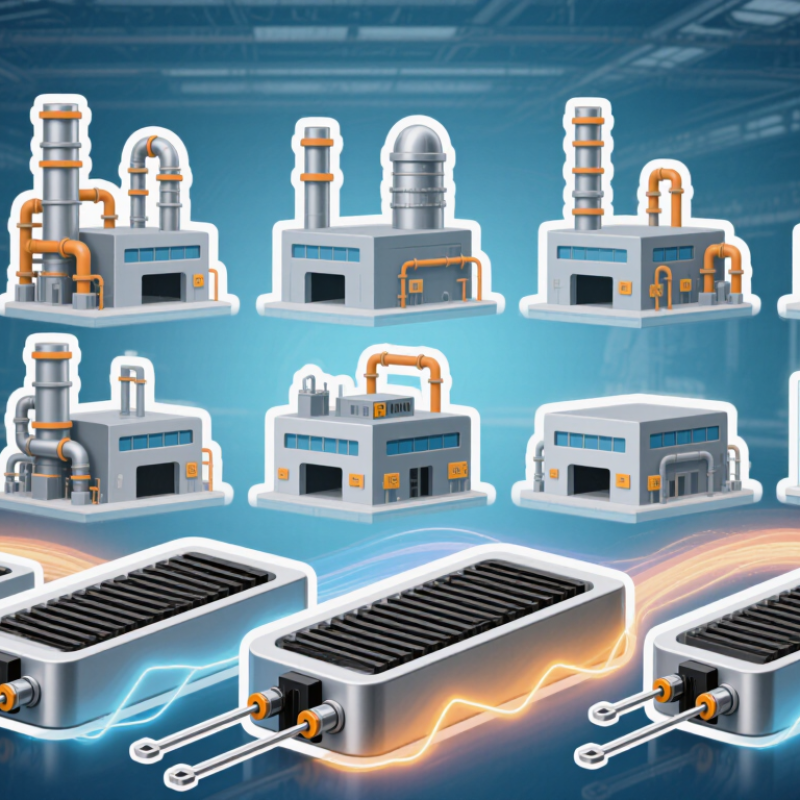
China’s EV Resistor Market: 2024 NEV Sales Surpassed 12 Million Units
China’s EV resistor market is moving with remarkable speed. In 2024, China’s new energy vehicle sales surpassed 12 million units, according to industry figures. This volume creates steady demand for battery, inverter, charging, and thermal-management resistors.
For global buyers comparing China’s top 10 EV resistor manufacturers, production scale is only one measure. A reliable supplier should show resistance tolerance data, pulse-load testing, insulation performance, and heat-cycle results. Ceramic and aluminum-housed designs often face demanding conditions near battery packs and power electronics. Buyers should also review traceability, incoming-material controls, and documented quality systems. Factory audits reveal details that brochures rarely show. Ask for samples.
The strongest manufacturers usually support custom resistance values, compact packaging, and high-voltage isolation. They should explain derating clearly, not hide it behind attractive specifications. Field experience also matters. A resistor that survives a laboratory pulse may fail after months of vibration, moisture, and repeated fast charging. This is where supplier claims need independent verification. Testing is not optional.
The market is expanding, but not every factory is equally prepared for export projects. Some technical documents remain incomplete. That deserves attention. Global buyers can reduce risk by comparing test records, delivery consistency, engineering response times, and after-sales accountability. A low unit price may become expensive when a small thermal weakness reaches mass production.
China Top 10 EV Resistor Manufacturers for Global Buyers? - China’s EV Resistor Market: 2024 NEV Sales Surpassed 12 Million Units
Buyer-oriented market and technical reference table for evaluating Chinese EV resistor suppliers without displaying company or brand names.
| No. | Data Dimension | Verified Market or Technical Data | Importance for Global EV Resistor Buyers |
|---|---|---|---|
| 1 | China NEV sales in 2024 | 12.866 million vehicles sold in China, according to annual industry data released by the China Association of Automobile Manufacturers. | Indicates the scale of domestic demand supporting local production capacity for battery, braking, charging, and power-electronics resistors. |
| 2 | China NEV production in 2024 | 12.888 million NEVs produced in China during 2024. | A large production base can support shorter lead times, broader process capabilities, and higher-volume purchasing programs. |
| 3 | China NEV export volume in 2024 | Approximately 1.284 million NEVs exported in 2024. | Export-oriented supply chains are more likely to have experience with international packaging, documentation, logistics, and compliance requirements. |
| 4 | Main EV resistor application | High-voltage pre-charge resistors are used to limit inrush current when a vehicle high-voltage bus is energized. | The supplier should provide pulse-energy ratings, resistance tolerance, insulation data, and validated thermal-cycle results. |
| 5 | Typical EV resistor technologies | Common designs include wirewound, thick-film, metal-element, aluminum-housed, water-cooled, and regenerative braking resistor assemblies. | Technology selection should match continuous power, short-duration overload, cooling method, mounting space, and expected service life. |
| 6 | High-voltage insulation requirement | Product validation commonly includes dielectric withstand, insulation resistance, creepage, clearance, and protection against moisture ingress. | These tests help confirm safe operation on vehicle platforms using high-voltage battery systems and power converters. |
| 7 | Automotive environmental validation | Automotive electrical components are commonly evaluated against environmental conditions such as temperature, vibration, mechanical shock, humidity, and corrosion; ISO 16750 is a widely used reference series. | Request test plans showing the actual severity levels, sample quantities, failure criteria, and post-test electrical performance. |
| 8 | Component reliability qualification | AEC-Q200 is a recognized passive-component qualification reference covering stress tests such as temperature cycling, high-temperature exposure, moisture resistance, and mechanical robustness. | Qualification evidence can reduce design-in risk, but buyers should verify that the exact resistor construction and rating are covered. |
| 9 | Key commercial evaluation factors | The most relevant purchasing variables are resistance value, tolerance, rated power, pulse-energy capability, operating temperature, cooling interface, annual capacity, minimum order quantity, and lead time. | A complete request-for-quotation should compare electrical, thermal, mechanical, quality, and delivery data rather than unit price alone. |
| 10 | Recommended supplier documentation | Global buyers should request datasheets, dimensional drawings, material declarations, process-control records, reliability reports, traceability information, change-control procedures, and sample inspection reports. | Document completeness helps buyers qualify anonymous or private-label sources while maintaining engineering and regulatory control. |