What is Welding Robots and How Do They Work?
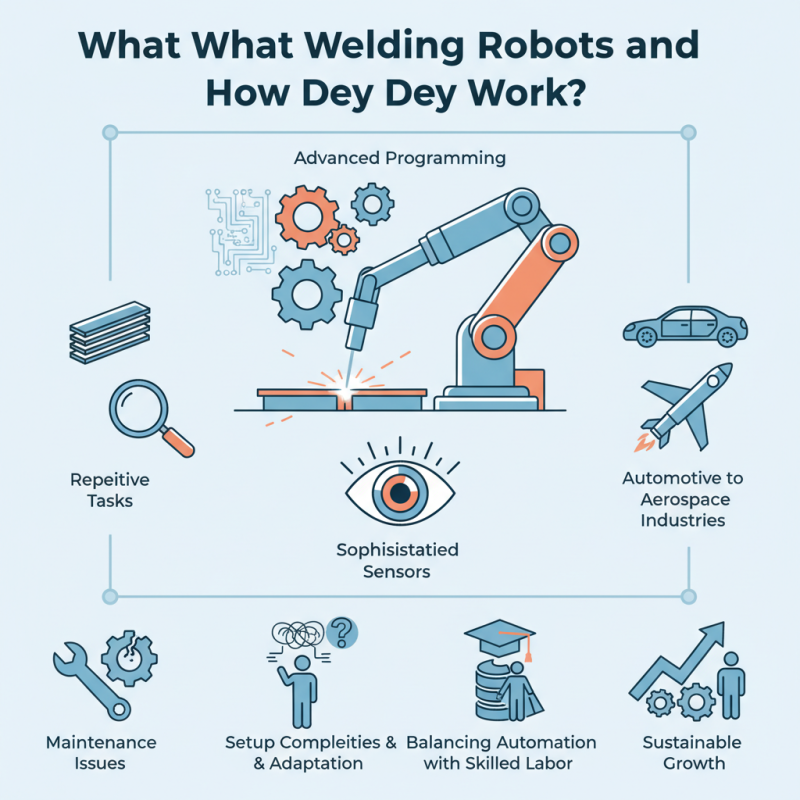
Welding Robots have transformed modern manufacturing. These automated machines enhance efficiency and precision in welding processes. With their ability to perform repetitive tasks, they significantly reduce human error. Welding robots can accurately join metal parts in various applications, from automotive to aerospace industries.
The technology behind welding robots combines advanced programming with sophisticated sensors. These systems analyze the welding environment in real-time. However, relying solely on robotics can pose challenges, such as maintenance issues and initial setup complexities. Some operators may struggle to adapt to this technology. Understanding these aspects is crucial for maximizing the benefits of welding robots.
Welding robots are not just tools; they represent a shift toward automation in industry. As industries evolve, the role of these robots will likely expand. Addressing gaps in training and technology adoption is an ongoing journey. Balancing automation with skilled labor remains essential for sustainable growth in welding processes.
Definition and Overview of Welding Robots in Modern Manufacturing
Welding robots are crucial in modern manufacturing. They automate the welding process, enhancing precision and speed. This technology has transformed industries such as automotive, aerospace, and construction. The Global Robotics Report indicates that the adoption of welding robots has grown by over 20% annually. This trend reflects a significant shift toward automation.
These robots typically utilize techniques like MIG and TIG welding. They operate under a programmed sequence, ensuring consistency in weld quality. However, the initial investment can be high, making it a challenging decision for small manufacturers. Reports suggest that while large firms see a return on investment within two years, smaller companies may struggle.
Safety is another concern. Operators need adequate training to work alongside robots. Miscommunication can lead to accidents. Hence, maintaining updated safety protocols is essential. The integration of AI in welding robots promises improvements, yet the technology still requires careful monitoring and human oversight. The journey of adopting welding robots is complex, with both opportunities and challenges ahead.
Key Components and Technologies Behind Welding Robots
Welding robots are transforming the manufacturing landscape. These automated systems enhance efficiency and precision in the welding process. At the heart of these robots are several key components and technologies that drive their performance.
One essential component is the robotic arm. Most welding robots have a six-axis arm that allows for agile movement in tight spaces. This design is crucial for reaching complex weld joints. Additionally, the end effector, often equipped with a welding torch, plays a vital role in the quality of the weld. Industry reports suggest that robotic welding can improve production speed by up to 30%.
Another critical technology is the computer control system. Advanced software controls the welding parameters such as speed and power. This customization can help adapt to different materials and thicknesses. However, the learning curve for programming these robots is steep. Many companies report challenges in training staff to operate and maintain these systems.
Nevertheless, the benefits often outweigh these difficulties, as accurate data from the International Federation of Robotics indicates a growing adoption rate of welding robots in various sectors.
Types of Welding Processes Performed by Robots
Welding robots have transformed how industries perform welding tasks. They utilize various welding processes, each suited for specific applications. Common types include MIG, TIG, and arc welding. Each process has unique strengths and requirements.
MIG welding, or Metal Inert Gas welding, is one of the most widely used methods. It is favored for its speed and versatility. Reports suggest that MIG welding accounts for approximately 60% of welding activities in manufacturing. Its process involves feeding a continuous solid wire electrode which melts and joins materials. This is efficient, but it may lack precision for intricate welds.
TIG welding, or Tungsten Inert Gas welding, offers greater control. It is ideal for thin materials and intricate designs. Although it accounts for only about 15% of robotic welding, it’s valued for its high-quality results. However, TIG welding requires skilled operators to set and monitor parameters carefully. This can lead to challenges in consistency in large-scale production.
Arc welding, meanwhile, is a versatile process widely used in heavy industries. Its ability to handle thick materials makes it crucial for construction and shipbuilding. Nonetheless, it can produce more fumes and require proper ventilation. Each welding method has strengths but also limitations that need addressing in automated settings.
Welding Robots: Types of Welding Processes
Benefits of Using Welding Robots in Industrial Applications
Welding robots have transformed industrial applications over the past decade. This shift toward automation presents significant advantages. According to a recent report by the International Federation of Robotics, the use of robotic welding in manufacturing increased by 15% annually. This growth suggests a rising reliance on automation to enhance productivity.
One key benefit of welding robots is precision. These machines can deliver consistent weld quality, reducing human error. For instance, studies show that robot welds meet quality standards 98% of the time, compared to 85% for manual welds. This precision not only improves product integrity but also decreases rework rates, saving time and resources.
Moreover, welding robots can operate continuously. This capability allows manufacturers to keep production lines moving even outside regular hours. However, the initial investment can be daunting. Integrating these systems requires training and a shift in workflow. Various sectors report a learning curve that might slow short-term gains. This challenge prompts companies to weigh the cost against long-term benefits.
What is Welding Robots and How Do They Work? - Benefits of Using Welding Robots in Industrial Applications
| Parameter | Description | Benefits |
| Automation Level | Degree of automation in welding processes | Increased productivity and reduced labor costs |
| Precision | Ability to create consistent welds | Improved quality and reduced waste |
| Safety | Reduction in workplace accidents | Safer working environment for human operators |
| Flexibility | Ability to adapt to different welding tasks | Versatile use across various applications |
| Cost Savings | Reduction in material waste and rework | Long-term savings in production costs |
Current Trends and Future Developments in Welding Robotics
Welding robotics is a rapidly advancing field. Current trends highlight a growing integration of artificial intelligence into robotic systems. Many industries are adopting AI to enhance precision. Reports indicate that the global welding robot market is projected to reach $5.3 billion by 2027, reflecting a compound annual growth rate of over 7.5%.
Collaboration between humans and robots is gaining traction. Collaborative welding robots, or cobots, improve operational efficiency. They can work alongside human welders, reducing risks and increasing productivity. According to the International Federation of Robotics, the adoption of cobots in various sectors has increased by 8% in the past two years. This trend showcases the need for flexible solutions in welding.
Future developments may include advancements in sensor technology. Enhanced sensors will allow robots to adapt to different materials and welding techniques. However, challenges remain. The cost of implementation can be high. Businesses may struggle to justify the investment. Continuous improvement in training and support is essential. The welding robotics landscape will evolve, driven by innovation and the need for better efficiency.